



- Home
- Latest poker news
- Anjouan Licenses: Cheap, Fast... and Questionable?
Anjouan Licenses: Cheap, Fast... and Questionable?
After tightening regulations in Curaçao and a sharp rise in the cost of local licenses, many gambling sites began switching en masse to Anjouan. Cheap, fast, tax-free, and bureaucratically free. However, an investigation by Australian journalists revealed serious problems with Anjouan Licensing Services and called into question the true value of these licenses. Let's look at the real situation and where does the conflict stem from.
Anjouan and the ABC Investigation
A series of reforms in Curaçao aimed at increasing transparency and trust from international regulators has led to a sharp increase in license costs. For many operators, especially smaller ones or those operating in grey areas, the new conditions have proven simply unaffordable.
Against this backdrop, Anjouan seemed almost ideal. Anjouan costs approximately 17,000 euros per year for a license, with renewals even cheaper. There are no taxes, no visits to the island, and registration takes about a month. Quick, simple, and hassle-free. It's no surprise that hundreds of gambling sites have migrated to this jurisdiction.
But it was precisely this simplicity that attracted media attention. The Australian publication ABC claimed that the Anjouan license and the entities that issue it essentially exist in a legal vacuum.
The investigation was sparked by the Leon Casino, which was actively advertised in Australia despite its illegal status in the country. An investigation revealed that the project operates under an Anjouan license. Further investigation led journalists to the conclusion that the regulator that issued this license is not recognized by the federal authorities of the Union of Comoros.
This raises the main question: if such an authority is considered non-existent at the state level, can its licenses be considered valid and reliable?
Where is Anjouan and what does Comoros have to do with it?
Anjouan is one of the three largest islands of the Union of the Comoros. Situated between Mozambique and Madagascar, the country gained independence from France in 1975, with the exception of the island of Mayotte, which remained French territory.
Political stability has never been Comoros' strong point. Over the past several decades, it has experienced more than twenty coup attempts. Anjouan itself twice, in 1997 and 2007, attempted to secede from the country and declare independence. The last attempt ended with military intervention in 2008, supported by the African Union.
While the island retained its autonomous status, enshrined in the 2001 Constitution, its actual powers have been significantly curtailed over time. These events laid the foundation for the current licensing issues.
How did Anjouan's offshore model emerge?
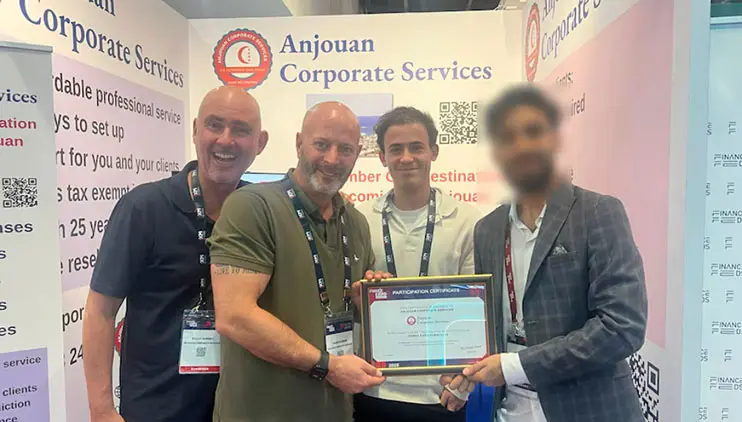
In search of its own sources of revenue, Anjouan began developing offshore financial regulation, including gambling. After an initial attempt at secession in 1997, a local regulator, the Anjouan Offshore Finance Authority (AOFA), was created.
Formally, AOFA still exists, but the federal authorities of Comoros do not recognize its legitimacy. Moreover, laws in 2013 and 2015 stripped it of any powers at the national level.
Anjouan Corporate Services acts as an intermediary between the regulator and operators. The Central Bank of Comoros explicitly states that this entity operates illegally. In 2023, another organization, Anjouan Licensing Services, was established. It operates on behalf of AOFA and, according to an ABC investigation, has already issued over 1,300 licenses.
Fiction or Harsh Reality?
From the perspective of the Comoros federal authorities, the entire licensing scheme appears illegal and fictitious. From the perspective of the Anjouan authorities, the system works: licenses are issued, fees are collected, and gaming sites are launched.
But it is precisely this contradiction that hits players the hardest. In such a situation, it is difficult to expect AOFA to effectively protect their interests in the event of a conflict. It is worth acknowledging that similar claims have been made against Curaçao and even some European jurisdictions.
Until the Comoros federal authorities officially recognize the Anjouan regulator, improving its reputation will be extremely difficult.
Players, in turn, should consider the realities of modern offshore gambling, where a license is an important, but often merely formal, indicator of security. For an objective assessment of a poker room or online casino's reliability, the platform's operational history, its handling of disputes, and genuine user reviews are far more important.


ACR Poker has expanded its schedule of qualifying tournaments for the WSOP Paradise Mega satellit...
ACR Poker is introducing a new series of regular tournaments: Turbo Tuesday, consisting of 40 MTT...
ACR Poker has launched Halloween Mystery PKO, a series of three tournaments featuring a new forma...
American poker pro Justin Vaysman won Event #6: $10,500 No-Limit Hold’em at the 2026 Poker ...